Skills Shift

Olga Yocheva

Test Post

Test Post The Courage to Be Seen Learning “What we fear doing most is usually what we most need to do.”Tim Ferriss Most people want to develop their soft skills. They read, attend workshops, or watch videos on communication, leadership, or empathy. But many stop short of the step that matters most: putting those skills into practice in real situations, in the unpredictable, people-filled contexts where they actually matter. It feels risky. What if I get it wrong? What if I look unprepared, awkward, or out of my depth? That fear of failing in front of others often keeps us trapped in private learning, practising in theory, polishing in silence, waiting to feel ready. The truth is, we never feel ready. Growth happens when we are willing to let others see our imperfections, to show the rough edges, the clumsy attempts, the half-formed ideas, in environments that are safe, supportive, and real. That is where learning turns into mastery. A Lesson from Learning Greek “The expert in anything was once a beginner.”Helen Hayes About eight years ago, I decided to learn Greek. I thought it would be easy. I was married to a Greek, I heard the language every day, and I was taking lessons. It seemed logical that I would pick it up naturally. But progress was frustratingly slow. I could read and understand words, yet I could not hold a proper conversation. I realised later that I was treating Greek like a private project, practising quietly, rehearsing phrases in my head, waiting until I felt confident enough to speak. Then, about five years ago, I moved with my family to Greece. I was surrounded by Greeks every day, at home, in the neighbourhood, in shops and cafés, and I thought that living there would finally make the language click. But even then, for the first couple of years, my progress stayed frustratingly slow. I still avoided speaking whenever I could. I listened, I nodded, I understood bits and pieces, but I was not putting myself into real conversations. It was not until later, after the COVID restrictions came down, when I started meeting people, some of whom preferred to speak to me in Greek and encouraged me to do the same, that things began to change. They did not switch into English, and that was a gift. I was thrown into the deep end, and I had to swim. I made endless mistakes. My grammar collapsed mid-sentence. I misunderstood jokes. I had built it up too much in my own head, overcomplicating things and worrying about getting everything right. That overthinking stopped me from practising, and as a result, it stopped me from improving. But once I finally started speaking, I realised that people did not care about my mistakes. They encouraged me, filled in the blanks, laughed with me, not at me. And seeing that made all the difference. It gave me the freedom to keep speaking, to keep trying. Within a few months, my fluency jumped further than it had in years of quiet study. That experience taught me a simple truth: we do not learn by hiding; we learn by engaging. Soft Skills Are a Language Too “You do not learn to walk by following rules. You learn by doing, and by falling over.”Richard Branson Soft skills work exactly the same way. You cannot become better at listening, influencing, or leading by reading about them. You need to speak the language, to use those skills, clumsily at first, in the mess of real situations. You learn communication not necessarily by speaking more, but by learning to understand the language of the person you are speaking to. Real communication is about meeting people where they are, recognising how they see the world, how they process information, and what makes them feel understood. When you speak in a way that resonates with them, you create connection. And once there is connection, you open the path to trust. Trust is the foundation of influence. When people trust that you understand them, they are far more open to listening, engaging, and moving forward with you. And that is where communication meets empathy. Because empathy is what allows you to step into someone else’s world, to see through their lens and feel what matters to them. It is not about agreeing with everything they say, it is about understanding where they are coming from so that your words can truly reach them. And you learn empathy not by talking about it, but by deliberately putting yourself in someone else’s shoes. It is about setting aside your own lens and seeing the world through theirs, their fears, their priorities, their pressures. You can start practising this in the most ordinary situations: in a conversation with a friend, during a disagreement with your partner, or even while trying to persuade a colleague. One of the best-known parenting books, *How to Talk So Kids Will Listen and Listen So Kids Will Talk*, illustrates this beautifully. When a child says, “I hate school,” the natural response is to correct them: “Do not say that,” or “You do not mean that.” But the authors show that the empathetic response, which is different, is also far more effective. It involves pausing, stepping into the child’s shoes, and acknowledging the feeling: “It sounds like you had a tough day.” That moment of support gives the child a cue that the parent seems to understand them, or at least is open to understanding their point of view. And that sense of being understood helps the child feel safe enough to open up about why they feel the way they do. This simple shift, from dismissing someone’s thoughts or feelings to acknowledging that they have them and trying to understand where they come from, changes everything. It is only when you do that that you begin to build genuine influence, because empathy opens the door to understanding. And once you understand where someone is coming from, you can

Test Post Read More »

Test Post

Test Post The Courage to Be Seen Learning “What we fear doing most is usually what we most need to do.” Tim Ferriss Most people want to develop their soft skills. They read, attend workshops, or watch videos on communication, leadership, or empathy. But many stop short of the step that matters most: putting those skills into practice in real situations, in the unpredictable, people-filled contexts where they actually matter. It feels risky. What if I get it wrong? What if I look unprepared, awkward, or out of my depth? That fear of failing in front of others often keeps us trapped in private learning, practising in theory, polishing in silence, waiting to feel ready. The truth is, we never feel ready. Growth happens when we are willing to let others see our imperfections, to show the rough edges, the clumsy attempts, the half-formed ideas, in environments that are safe, supportive, and real. That is where learning turns into mastery. A Lesson from Learning Greek “The expert in anything was once a beginner.”Helen Hayes About eight years ago, I decided to learn Greek. I thought it would be easy. I was married to a Greek, I heard the language every day, and I was taking lessons. It seemed logical that I would pick it up naturally.  But progress was frustratingly slow. I could read and understand words, yet I could not hold a proper conversation. I realised later that I was treating Greek like a private project, practising quietly, rehearsing phrases in my head, waiting until I felt confident enough to speak. Then, about five years ago, I moved with my family to Greece. I was surrounded by Greeks every day, at home, in the neighbourhood, in shops and cafés, and I thought that living there would finally make the language click. But even then, for the first couple of years, my progress stayed frustratingly slow. I still avoided speaking whenever I could. I listened, I nodded, I understood bits and pieces, but I was not putting myself into real conversations. It was not until later, after the COVID restrictions came down, when I started meeting people, some of whom preferred to speak to me in Greek and encouraged me to do the same, that things began to change. They did not switch into English, and that was a gift. I was thrown into the deep end, and I had to swim. I made endless mistakes. My grammar collapsed mid-sentence. I misunderstood jokes. I had built it up too much in my own head, overcomplicating things and worrying about getting everything right. That overthinking stopped me from practising, and as a result, it stopped me from improving. But once I finally started speaking, I realised that people did not care about my mistakes. They encouraged me, filled in the blanks, laughed with me, not at me. And seeing that made all the difference. It gave me the freedom to keep speaking, to keep trying. Within a few months, my fluency jumped further than it had in years of quiet study. That experience taught me a simple truth: we do not learn by hiding; we learn by engaging. Soft Skills Are a Language Too “You do not learn to walk by following rules. You learn by doing, and by falling over.”Richard Branson Soft skills work exactly the same way. You cannot become better at listening, influencing, or leading by reading about them. You need to speak the language, to use those skills, clumsily at first, in the mess of real situations. You learn communication not necessarily by speaking more, but by learning to understand the language of the person you are speaking to. Real communication is about meeting people where they are, recognising how they see the world, how they process information, and what makes them feel understood. When you speak in a way that resonates with them, you create connection. And once there is connection, you open the path to trust. Trust is the foundation of influence. When people trust that you understand them, they are far more open to listening, engaging, and moving forward with you. And that is where communication meets empathy. Because empathy is what allows you to step into someone else’s world, to see through their lens and feel what matters to them. It is not about agreeing with everything they say, it is about understanding where they are coming from so that your words can truly reach them. And you learn empathy not by talking about it, but by deliberately putting yourself in someone else’s shoes. It is about setting aside your own lens and seeing the world through theirs, their fears, their priorities, their pressures. You can start practising this in the most ordinary situations: in a conversation with a friend, during a disagreement with your partner, or even while trying to persuade a colleague. One of the best-known parenting books, *How to Talk So Kids Will Listen and Listen So Kids Will Talk*, illustrates this beautifully. When a child says, “I hate school,” the natural response is to correct them: “Do not say that,” or “You do not mean that.” But the authors show that the empathetic response, which is different, is also far more effective. It involves pausing, stepping into the child’s shoes, and acknowledging the feeling: “It sounds like you had a tough day.” That moment of support gives the child a cue that the parent seems to understand them, or at least is open to understanding their point of view. And that sense of being understood helps the child feel safe enough to open up about why they feel the way they do. This simple shift, from dismissing someone’s thoughts or feelings to acknowledging that they have them and trying to understand where they come from, changes everything. It is only when you do that that you begin to build genuine influence, because empathy opens the door to understanding. And once you understand where someone is coming from, you

Test Post Read More »

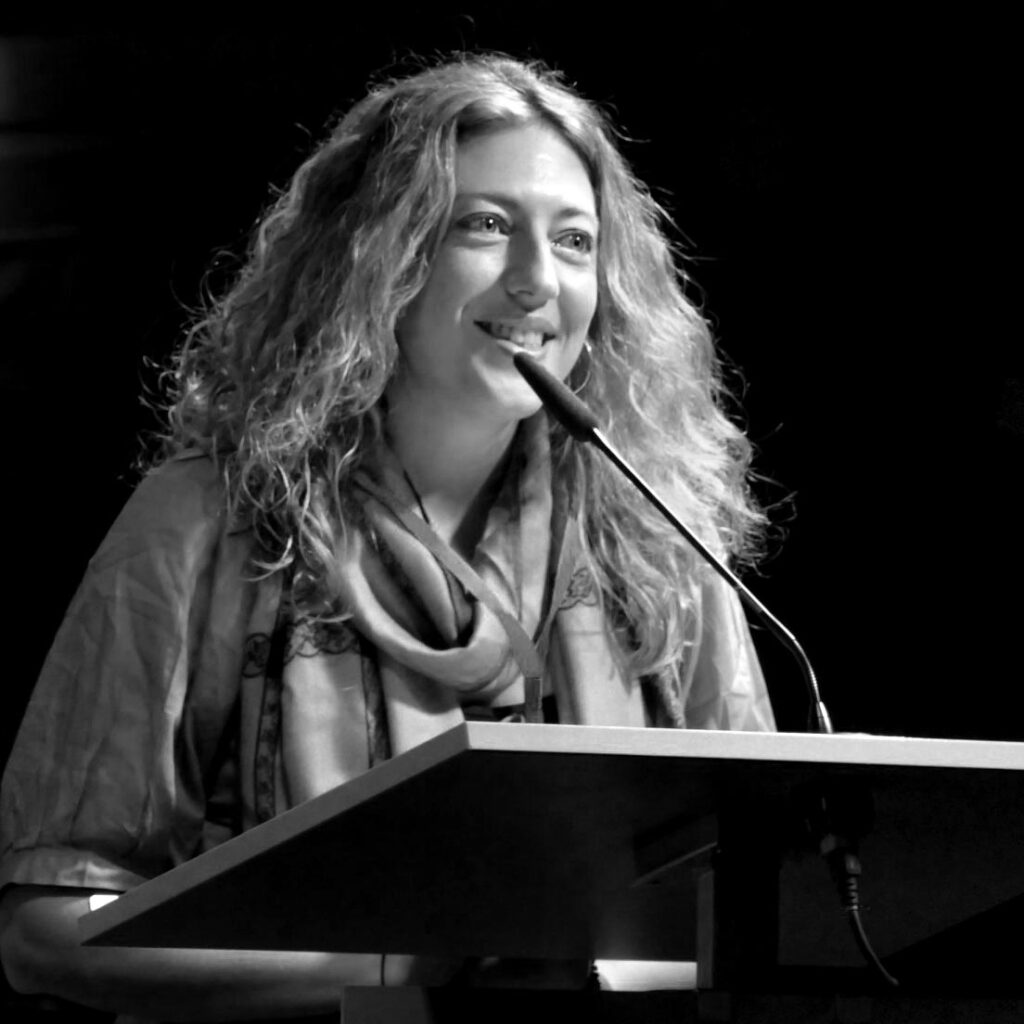
Dr. Jillian Michelle Pandor (PhD)

Dr. Jillian Michelle Pandor (PhD) Board of Advisors I have been extremely fortunate to spend the better part of the last two decades working in a field I am deeply passionate about—a field that prides itself on shaping minds, both young and experienced, for the unpredictable future that lies ahead. Throughout my journey, I have witnessed first-hand the evolving challenges that the education sector faces. Emerging technologies continue to reshape our focus from “product” to “process,” and educators have become increasingly responsible not only for delivering content, but also for cultivating learning, curiosity, and adaptability. We must assess learning in more nuanced ways while striking a delicate balance: encouraging students to question, to challenge, and to think independently, while simultaneously equipping them with the capacity to unlearn and relearn as the world around them shifts. I consider myself not only an educator, but also an educational researcher and a lifelong learner. I have had the privilege of working across K–12 and higher education contexts in the United States, Europe, and the Middle East. These experiences allowed me to observe diverse academic cultures, yet across all of them I noticed a consistent truth: successful learning is anchored in three foundational elements—rigor, relevance, and relationships. Regardless of geographical or cultural background, the most meaningful learning occurs when these three elements intersect. My own academic path reflects this global perspective. From my formative K–12 and undergraduate years in the United States, to completing my Master’s and PhD in Spain, I experienced firsthand the rich juxtapositions that define modern education. I became particularly intrigued by how international students navigate unfamiliar academic landscapes and, more importantly, why they often struggle to acclimate. This curiosity ultimately shaped my PhD dissertation on foreign student integration in new academic contexts. My research findings reinforced what I had long felt intuitively: teaching is fundamentally a human-centered art form. True rigor emerges only when authentic relationships are built, and when content becomes relevant to a learner’s personal context, identity, and future aspirations. This belief was further solidified when I began teaching in a Master of Education program in the UAE, where I mentored experienced teachers and school leaders from diverse backgrounds. While I introduced them to the latest research and best practices in education, it became increasingly clear that effective teaching is not about reciting theory. Rather, it is about creating the conditions in which students can experience learning in authentic, meaningful ways. Today, as Chair of the Department of Liberal Arts at Rochester Institute of Technology Dubai, I oversee the largest academic department on campus and ensure excellence in the delivery of our General Education program. In the American higher education model, General Education serves as a bridge between K–12 learning and university specialization, broadening students’ perspectives beyond their major fields. Whether through creative writing, psychology, public speaking, or other disciplines, our aim is to help students implicitly build the soft skills needed for success in the modern workplace. Yet despite our best efforts, industry continues to signal a persistent gap—one that cannot be addressed by traditional academic approaches alone. This is where Skills Shift captured my interest. Soft skills have long been perceived as intangible, innate, or secondary to academic achievement. But in my own professional experience—leading a team of nearly 45 academics and navigating complex, often sensitive situations—my success has never relied solely on my PhD. It has come from learning to listen, to connect dots between stakeholders, to take calculated risks, to negotiate conflict, and to adapt to continuous change. These are skills I learned through experience, not explicit instruction. In my work as an Advisory Board Member for two K–12 schools in the UAE, I see the same question emerging repeatedly: how do we differentiate in an increasingly competitive education market? How do we better align degrees with career prospects and employer expectations? What if there is a solution that complements traditional academics—a “yes, and” approach that provides a framework on top of discipline-specific content, helping students master the art of navigating challenge and change? What if we could shorten the on-the-job learning curve and strengthen students’ resilience from the start? These questions are exactly why I have joined the Skills Shift journey as an Advisory Board Member. I believe this unique approach has the potential to create truly transformative impact—one that prepares learners not just for today’s world, but for the world still unfolding. Evidence Based Approach Ensure soft-skills training deliver soft-skills as teachable and research-backed competency that is supported by academic rigor, grounded in research and pedagogy. Strengthening Employablity Insight into ways to close employability gap through addressng needs in communication, adaptability, critical thinking and reslience. Institutional Leadership Dr. Pandor’s experience in departmental leadership in education demonstrates skills in navigating complex, sensitive environments, listening, sensemaking, negotiation, conflict management, risk taking, and adaptability. Ready to Shift Your Skills, Team or Organisation? Dr. Jillian Michelle Pandor PhD. differentiates Skills Shift by grounding human skills in academic rigor, bridging the persistent gap between education and employability, and exemplifying leadership rooted in lived human experience rather than credentials alone. Together, these themes give Skills Shift credibility, relevance, and defensibility in a crowded market, and create clear value for customers navigating change in the age of AI. Get in touch with us to discuss how we can help you and your organisation. Contact Us

Dr. Jillian Michelle Pandor (PhD) Read More »

Rama Syahrul

Rama Syahrul Operations Advisor With more than two decades of experience across professional services, enterprise technology, digital transformation, and organisational change, my career has taken me through complex, high pressure environments. These are environments where outcomes are rarely determined by technical capability alone, but by the ability to understand people, influence decisions, and build trust through uncertainty. Early on, I noticed a consistent pattern. The hardest problems were not technical. They were human. Projects succeeded or failed based on communication quality, emotional intelligence, and the ability to align diverse stakeholders toward shared outcomes. Managing these human dynamics proved far more challenging than solving deterministic technical problems, and it fundamentally shaped how I approached my work and my career. Consulting gave me exposure to mentors, frameworks, and real world situations that revealed there is an entire discipline behind perceiving, influencing, and shaping human behaviour. I learned how storytelling, structured communication, and thoughtful facilitation can build consensus, navigate difficult conversations, and influence belief. Most importantly, I learned that trust is not assumed. It is built deliberately through behaviour, consistency, and empathy. At Accenture, I helped shape, plan, and execute large scale digital transformation programs for major organisations. My role extended beyond delivery into facilitating executive alignment, shaping business narratives, and guiding decision making in ambiguous environments. Storytelling and influence were essential in enabling investment decisions and sustaining long term transformation efforts across complex stakeholder landscapes. Later at a rapidly growing SaaS startup, holding regional leadership role, I was accountable for building and scaling consulting and delivery organisations across Asia Pacific. Much of my work involved managing difficult conversations, de escalating conflict, re establishing credibility, and rebuilding trust with customers. These experiences reinforced my belief that commercial success is deeply rooted in human capability. One of the most meaningful parts of my leadership journey was developing people. I designed curriculum and coaching frameworks to help highly technical consultants evolve into trusted advisors. By focusing on communication, influence, and client value creation, we enabled teams to engage executives with confidence, advise rather than simply deliver, and build stronger long term relationships with customers and partners. More recently, I worked closely with founders and leadership teams of growing organisations, helping them assess talent capability, align skills to shifting industry demands, and sharpen their value proposition. In an era of rapid technological change, sustainable growth depends even more on people who can think critically, communicate clearly, and lead with empathy. I co-founded Skills Shift because I believe the rise of artificial intelligence makes human skills more important, not less. They are essential life skills that enable better decisions, stronger relationships, and more meaningful outcomes in business, education, and life. Driving Measurable Outcomes Practical experience applying communication, storytelling, influence, and emotional intelligence to secure investment decisions, recover at risk accounts, grow revenue, and scale organisations. Building Trust from Expertise Led highly technical teams of engineers, architects, developers and consultants, and helped them communicate value, influence stakeholders, and engage executives whilst leveraging technical credibility and excellence. Human Capability as Differentiator Rama has designed and led capability development at organisational scale to complement core value proposition, align with Go To Market strategy and strengthen market differentiation. Ready to Shift Your Skills, Team or Organisation? Rama’s experience differentiates Skills Shift in three fundamental ways. He connects human skills to real business outcomes. He bridges technical excellence with trusted advisory presence. He also designs human capability as a system that scales and endures. Together, these themes give Skills Shift credibility, relevance, and defensibility in a crowded market, and create clear value for customers navigating change in the age of AI. Get in touch with us to discuss how we can help you and your organisation. Contact Us

Rama Syahrul Read More »

Myrto-Helena Pertsinidi

Myrto-Helena Pertsinidi My professional journey is guided by a strong belief that learning becomes truly meaningful when it connects knowledge with experience, people, and purpose. I am motivated by the idea that education should be experiential, participatory, and rooted in real life, enabling people of all ages to grow, adapt, and navigate complexity with confidence. Through my studies in International and European Politics at the University of Edinburgh, and in International Relations with a focus on the Mediterranean region at the University of the Aegean and Université Paris Nanterre, combined with extensive international experience, I developed strong critical thinking and analytical skills, along with the ability to communicate across cultures and contexts. Living, studying, and volunteering in different European environments, as well as beyond Europe, strengthened my adaptability and intercultural awareness and helped me understand how deeply context, culture, and perspective shape the way people learn, communicate, and collaborate. A key turning point in my path was my early engagement with learner-centred and non-formal education approaches. This shifted my focus from content delivery to learning design, placing the learner and their experience at the centre of the process. At the same time, my long-standing connection to creativity and culture has strongly influenced my work. I have consistently drawn on creative practices in my professional activities, designing learning experiences that use artistic and creative tools to make learning more engaging, accessible, and meaningful. For more than fifteen years, I have worked in the education and cultural sectors, focusing on international project development, proposal writing, educational programme design, event management, and the coordination of multidisciplinary teams. At Jugend- & Kulturprojekt e.V., a Germany-based sociocultural and educational organisation, I serve as Deputy Chair and Senior Programme Manager. In this role, I design, coordinate, and oversee international projects and their educational outputs in the fields of youth work, education, culture, and social inclusion. Being an integral part of the organisation for over fifteen years, I have gained extensive experience in working with diverse teams and contributing to the organisation’s strategic direction. My experience has shown me that both younger generations and professionals increasingly need skills that go beyond formal education or technical expertise. The ability to communicate clearly, think critically, reflect on information, and engage constructively with different perspectives has become essential for working, learning, and acting responsibly in today’s societies. Non-formal education, experiential learning, creativity, and intercultural exchange are not simply approaches I apply in my work; they form the foundation of my professional identity. They shape how I lead, collaborate, and design learning environments grounded in empathy, resilience, and purpose. This path has led me to my role on the Founders Board of Skills Shift, where I contribute to initiatives that strengthen human skills in a rapidly evolving, technology-driven world.   Human Centred Learning Human Centred Learning Myrto’s grounding in education, international relations, and cultural work allows her to craft learning experiences that feel relevant, inclusive, and emotionally resonant. Cross Culture Intelligence Cross Culture Intelligence Her work in international education and sociocultural projects fosters inclusive dialogue and create psychologically safe learning environments by navigating differences in norms, values and communication style. Program Delivery Excellence Myrto’s experience in programme coordination and international project management helps translate vision into execution by managing stakeholders, timelines, partners, facilitators, and participants. Ready to Shift Your Skills, Team or Organisation? Myrto’s experience differentiates Skills Shift by ensuring learning is deeply human, culturally intelligent, and operationally sound. She transforms soft skills from abstract concepts into engaging experiences, ensures global relevance through inclusive design, and delivers programmes with consistency and care. Together, these themes give Skills Shift credibility, relevance, and defensibility in a crowded market, and create clear value for customers navigating change in the age of AI. Get in touch with us to discuss how we can help you and your organisation. Contact Us

Myrto-Helena Pertsinidi Read More »

Learning In Public II

For far too long, the term “soft skills” has been a misunderstood label, relegating some of the most crucial human abilities to the background. People have long considered them secondary, optional, or at best a “nice-to-have,” especially when compared to so-called “hard skills.” The problem is right there in the name.

Learning In Public II Read More »

Learning In Public II

For far too long, the term “soft skills” has been a misunderstood label, relegating some of the most crucial human abilities to the background. People have long considered them secondary, optional, or at best a “nice-to-have,” especially when compared to so-called “hard skills.” The problem is right there in the name.

Learning In Public II Read More »

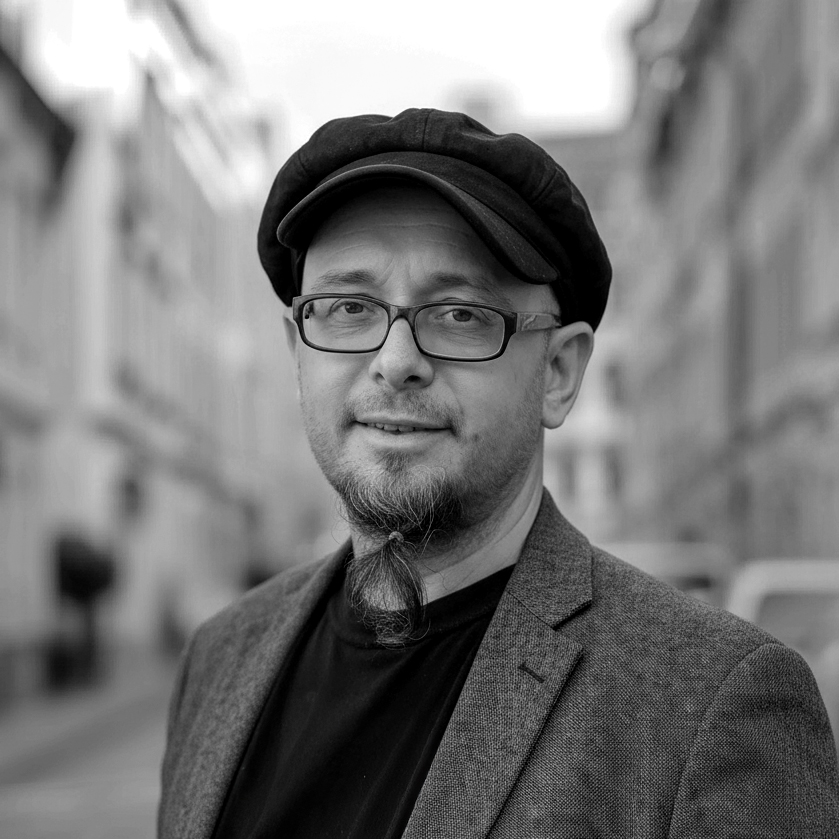
Stefan Kiehne

Stefan Kiehne | Advisory Board Member at Skills Shift “Sustainable growth starts with people; their skills, their agency, and their ability to adapt.” This belief has guided my professional journey and reflects my commitment to human-centred development, lifelong learning, and responsible leadership. I am driven by the conviction that organisations and communities grow sustainably when learning, inclusion, and ethical decision-making are embedded in their structures and everyday practice. My work is shaped by values of adaptability, collaboration, social responsibility, and long-term impact. I hold an academic background in Political and Social Sciences from TU Dresden, which shaped my understanding of social structures, governance, and civic engagement. From an early stage, I have combined theoretical insight with hands-on practice in community-based cultural and youth work. I am the founder and Chair of Jugend- & Kulturprojekt e.V. (JKPeV), an organisation established in Dresden in 2004 and rooted in the values of cultural diversity, active citizenship, and social inclusion. In this role, I am responsible for the strategic, financial, legal, and operational management of the organisation, ensuring that creative ambition is supported by sustainable structures and sound governance. Over the years, I have led and monitored the implementation of numerous European, national, regional, and local projects, including training courses, summer camps, seminars, conferences and artistic residencies. My responsibilities span project design and coordination, financial oversight, organisational development, and long-term strategic planning. Alongside this work, I have been actively involved as a board member and volunteer in youth and cultural centres and have organised cultural and music festivals across Saxony for more than fifteen years. Through these activities, I have developed extensive expertise in event management, logistics, coordination, and financial administration. Beyond JKPeV, I serve as Chair of KulturBüro, contributing my practical experience to board-level discussions and strategic decision-making in support of cultural initiatives and collaborative governance. I am also the initiator of the Full Moon Gallery, a monthly exhibition format bringing contemporary art into public space, and the founder of KulturCentrale, a multifunctional cultural venue that has become a vibrant hub for artists, cultural professionals, academics, activists, and young people. These initiatives have contributed significantly to the cultural life of Dresden’s Hechtviertel and strengthened connections between creative communities and the wider public. My life path and professional journey in community-based cultural work have shaped my commitment to meaningful, responsible leadership. Through many years of hands-on engagement at local and international levels, I have gained deep insight into navigating complex environments and supporting initiatives that balance strategic vision with practical implementation. This path has led me to join the Skills Shift Advisory Board, where I offer advice and insights grounded in real-world experience, governance awareness, and an operational perspective, alongside a strong commitment to human-centred and sustainable growth. Human Centred Operations Human Centred Operations Stefan’s experience allows Skills-Shift to credibly demonstrate that its human-skills philosophy is compatible with governance, accountability, and institutional rigor, particularly important for public sector, education, and partner organisations. Community-Based Learning & Ecosystem Community-Based Learning & Ecosystem Stefan helps Skills-Shift’s to be a community-driven capability platform founded on engagement, peer learning, and ecosystem growth rather than purely transactional training models. Multi Stakeholder Environments Stefan’s work spans local, national, and European projects, involving public institutions, cultural organisations, volunteers, artists, youth groups, and funding bodies. This involved continuous negotiation, coordination, and alignment across diverse interests and cultural contexts. Ready to Shift Your Skills, Team or Organisation? Stefan Kiehne differentiates Skills-Shift by anchoring its human-skills mission in real governance, community-based learning, and the practical navigation of complex stakeholder environments. His experience ensures that Skills-Shift’s approach to communication, influence, and leadership is not only human-centred, but operationally credible and institutionally relevant. Contact Us

Stefan Kiehne Read More »

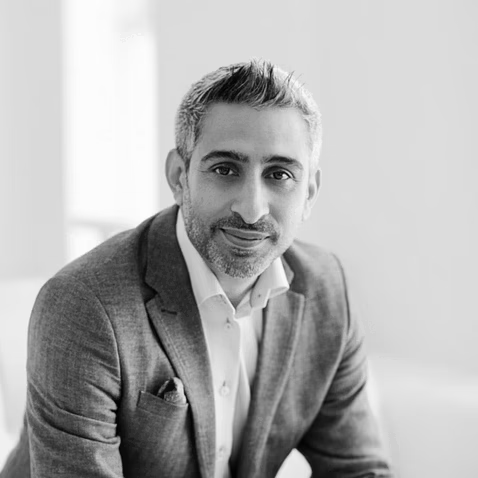
Fawzi Fares

Fawzi Fares Chief Learning Officer I’ve spent more than 26 years in the IT industry, but the most important things I’ve learned were never written in any technical specification. Early in my career, I realised that the difference between a solution that works on paper and a solution that works in reality is almost never about the technology — it’s about the people. I started out as a technologist who loved solving complex problems. But along the way, I found myself drawn to the moments in a project that technology alone couldn’t fix: misaligned expectations, unclear communication, frustrated teams, or a client who didn’t feel understood. Those moments taught me that architecture isn’t just about systems — it’s about clarity, trust, and helping people move forward together. That shift shaped my entire career. As a consultant and solution architect, I became the person teams called when things were complicated, sensitive, or stuck. I helped translate business needs into clean solutions, guided stakeholders through ambiguity, and built the human alignment needed for real progress. Mentoring naturally followed. I saw talented technical professionals who struggled not because of their expertise, but because they didn’t yet have the tools to navigate communication, influence, or collaboration. Helping them grow into confident advisors became one of the most rewarding part of my work. My entrepreneurial path began with co-founding CloudSense, where I led the design of its CPQ and order management platform. What started as a small idea grew into a global business — one that ultimately achieved a successful exit. That experience taught me the reality of building something from the ground up: the strategy, the pressure, the resilience, and above all, the importance of people who can communicate clearly and lead with trust. Today, with Skills Shift, I’m bringing all these experiences together — the technical depth, the consulting mindset, the entrepreneurial lessons, and the belief that human skills are what truly drive transformation. Technology will keep evolving. Complexity isn’t going away. But clarity, communication, and human connection will always determine what actually succeeds. 26+ Years in IT & Digital Transformation Led complex enterprise solutions across telecommunications and technology sectors, translating business needs into scalable architectures that drive real business value. Solution Architect & Trusted Advisor Bridges the gap between technical complexity and business clarity, helping teams navigate ambiguity and build alignment when projects are complicated or stuck. Co-Founder with Successful Exit Built and scaled a global SaaS startup from concept to successful exit. Combining technical depth with entrepreneurial resilience and strategic leadership to drive customer outcomes. Ready to Shift Your Skills, Team or Organisation? Whether you’re an individual seeking to future-proof your capabilities, an organisation looking to build competitive advantage through human skills, or a partner interested in systemic change, Skills Shift offers a proven pathway forward. Contact Us

Fawzi Fares Read More »